

In stock
-
-
In Stock
-
In stock
-
In Stock
-
In Stock
-
In stock
-
In Stock
-
In Stock


-
In stock
-
In Stock
-
In Stock
-
In Stock


 The History of Yamaha Audio: A Legacy of Innovation and Excellence
The History of Yamaha Audio: A Legacy of Innovation and Excellence ...
Dec 26, 2025 4627
 Hybrid STK Amplifier Replacement Guide – Compatible Substitutes for STK, RSN and SVI Power Modules
 The History of Arcam: A Legacy of Audio Excellence
The History of Arcam: A Legacy of Audio Excellence
Dec 26, 2025
1859
 Induction Hob Ovens: The Future of Efficient and Precise Cooking
Induction Hob Ovens: The Future of Efficient and Precise Cooking
Dec 26, 2025
1241
-
Order Delivery
We use only tracked delivery services.
-
Payments
We accept card payments and the PayPal service.
Custom Block
Modern vs Vintage Stereo Amplifiers: Build Quality Compared
Introduction
When choosing a stereo amplifier, many audiophiles face a classic dilemma: modern stereo amplifiers or vintage amps from the golden age of hi-fi? While sound signature often dominates the conversation, build quality is one of the most important—and most misunderstood—factors.
This article compares modern and vintage stereo amplifiers purely from a build quality perspective, examining materials, internal components, durability, serviceability, and manufacturing standards.
1. Build Philosophy: Then vs Now
Vintage Stereo Amplifiers (1970s–1980s)
Vintage amplifiers were built during a time when hi-fi manufacturers competed on engineering excellence, not price optimisation.
Key characteristics: Designed for decades of use, Over-engineered power supplies, Minimal cost-cutting, Heavy reliance on discrete components.
Brands like Technics, Sansui, Pioneer, Marantz, Yamaha, and Luxman prioritised longevity and repairability.
Modern Stereo Amplifiers (2000s–Today)
Modern amps are built in a cost-efficient, performance-optimised environment.
Key characteristics: Designed to meet specific price points, Focus on compactness and energy efficiency, Advanced digital control and protection circuits, Shorter product life cycles.
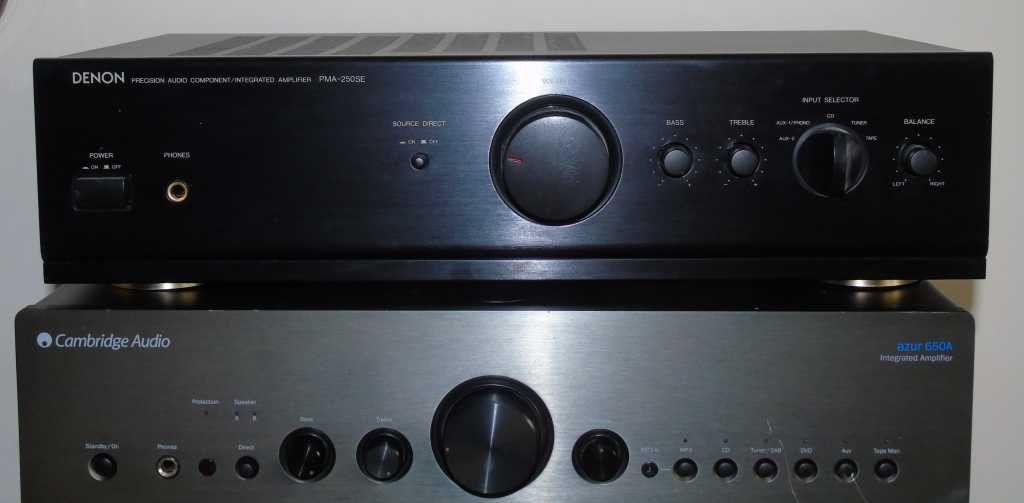
Brands like Arcam, Cambridge Audio, NAD, Denon, and Rotel focus on balancing sound quality, features, and manufacturing cost.
2. Chassis and External Construction
Vintage Amps
Pros:
Thick steel or aluminium chassis
Heavy transformers mounted directly to metal frames
Real wood veneer or solid aluminium faceplates
Mechanical switches and knobs made of metal
Cons:
Heavier and bulkier
Susceptible to rust if poorly stored
Vintage amplifiers often weigh two to three times more than modern equivalents due to robust casing and oversized internal parts.
Modern Amps
Pros:
Lighter materials reduce vibration
CNC-machined aluminum on higher-end models
Sleeker, minimalist design
Cons:
Thinner steel or plastic panels on budget models
More reliance on cosmetic finishes than on structural strength
High-end modern amps are well-built, but entry-level models often compromise on chassis thickness.
3. Internal Components and Layout
Vintage Amplifier Build Quality
Vintage amplifiers typically feature:
Large linear transformers
Discrete transistors (no integrated amplifier chips)
Point-to-point wiring or thick PCBs
Through-hole components
Generous spacing for heat dissipation
This makes them:
Easier to repair
More tolerant of electrical stress
Longer-lasting when properly maintained
However, electrolytic capacitors do age and usually require replacement after 30–40 years.
Modern Amplifier Build Quality
Modern amps use:
Surface-mount components (SMD)
Smaller switching or toroidal power supplies
Integrated circuits for amplification and control
Highly optimised PCB layouts
Advantages:
Better consistency
Lower noise floor
Improved thermal efficiency
Disadvantages:
Harder to repair
Entire boards are often replaced instead of single components
Long-term reliability depends heavily on the manufacturer's quality control
4. Controls, Switches, and Potentiometers
Vintage Controls
Mechanical switches rated for high current
Large, analogue potentiometers
Physical relay switching
These components feel solid and tactile, but they:
Can oxidize
Require cleaning or replacement over time
Modern Controls
Digital encoders
Microprocessor-controlled volume
Touch-sensitive buttons
While modern controls are precise and silent, they:
Depend on the firmware
Can fail rather than degrade gradually
5. Repairability and Longevity
Vintage Amplifiers
Strengths:
Fully serviceable
Widely available schematics
Components can be replaced individually
Many vintage amps from the 1970s are still operating today after basic servicing.
Weaknesses:
Aging capacitors
Obsolete transistors in rare cases
Modern Amplifiers
Strengths:
Stable performance during the warranty period
Built-in protection systems
Weaknesses:
Limited manufacturer support after discontinuation
Proprietary chips
Firmware dependency
Once a modern amplifier fails outside warranty, repair costs can exceed its resale value.
6. Manufacturing Standards and Quality Control
Then: Vintage Era
Built in Japan, the USA, or Western Europe
Long production runs
Manual assembly and inspection
Conservative electrical ratings
Now: Modern Era
Globalized manufacturing
Automated assembly
Strong QC in premium brands
Cost pressure in mass-market products
High-end modern amps match or exceed the build quality of vintage amps—but budget modern amps rarely do.
7. Which Has Better Build Quality?
Vintage Amplifiers Win If You Value:
Heavy, overbuilt construction
Long-term serviceability
Mechanical reliability
Analog purity
Modern Amplifiers Win If You Value:
Precision manufacturing
Compact and efficient design
Integrated features
Consistent performance out of the box
Conclusion
From a purely build-quality standpoint, well-maintained vintage stereo amplifiers generally outperform modern budget and mid-range models. Their heavy chassis, discrete components, and repairable design make them incredibly durable.
However, modern high-end amplifiers rival or surpass vintage gear in precision, thermal management, and consistency—at a significantly higher price.
The best choice depends on whether you prioritise longevity and craftsmanship or modern engineering and convenience.
SEO Keywords Included:
modern vs vintage stereo amplifiers
stereo amplifier build quality
vintage hi-fi amplifier durability
modern integrated amplifier comparison
audiophile amplifier construction
Class G Amplifiers Explained: How They Work, Advantages, Disadvantages and Best Examples
What Is a Class G Amplifier? Class G...
Jul 30, 2026 669
 Class C Amplifiers Explained: How They Work, Advantages, Disadvantages and Applications
What Is a Class C and D Amplifier? Class C amplifiers are fundamentally...
Jul 30, 2026 596
 Class A Amplifiers Explained: How They Work, Advantages, Disadvantages and Best Examples
Amplifier Classes Explained – Part 2 Class A Amplifiers What Is a...
Jul 30, 2026 114
 Amplifier Classes Explained: The Complete Guide to Audio Amplifier Technologies (2026 Edition)
Amplifier Classes Explained – The Ultimate Guide The audio amplifier is one of the most important components in...
Jul 30, 2026 596